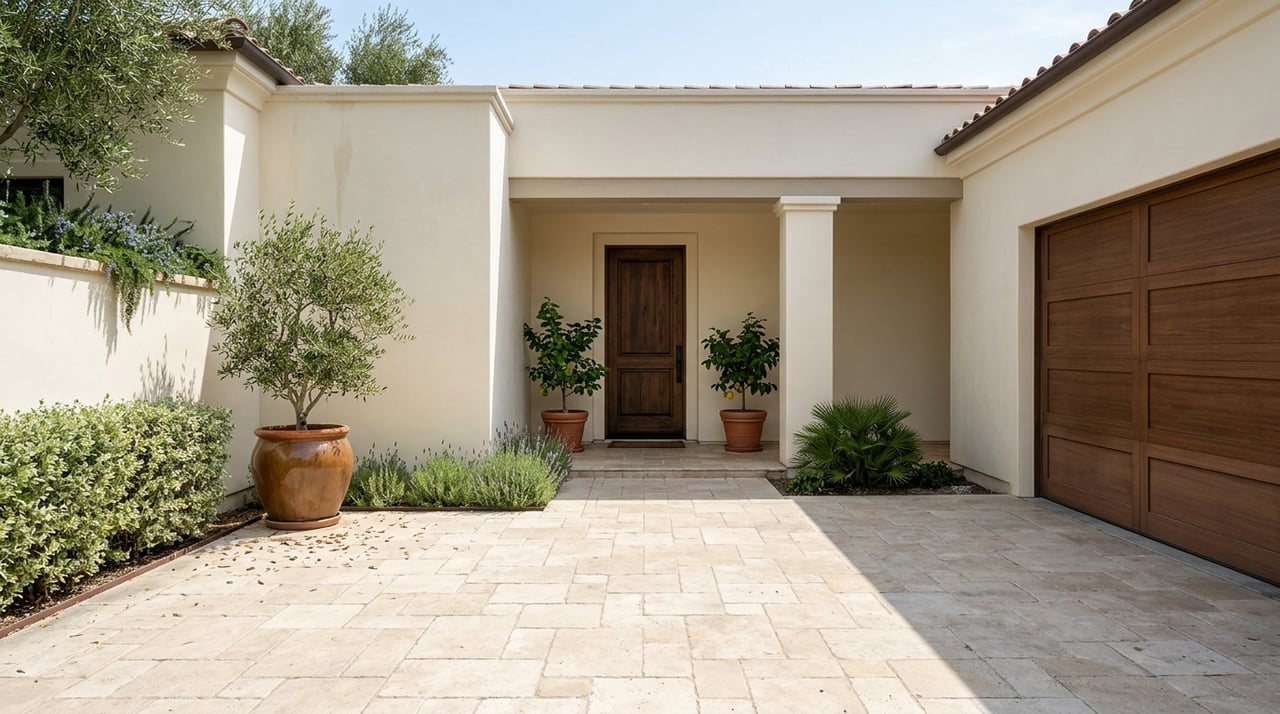
In Brentwood, the List Price Isn't What Decides Your Payment
August 27, 2026
August 27, 2026
Picture two Brentwood buyers, both closing on homes listed at $760,000 within a week of each other. Same price, same loan amount, same rate lock. One of them will pay roughly $200 more a month than the other for the life of the mortgage, and the listing sheet never said why.
The difference isn't the house. It's a line item that shows up on the property tax bill and nowhere on the flyer: the Mello-Roos special tax, and in Brentwood it varies so much by subdivision that comparing two homes by price alone tells you almost nothing about what you'll actually owe every month.
Every home in California carries the same base property tax, roughly 1% of assessed value under Proposition 13, plus small voter-approved bonds that barely differ from city to city. That part is predictable. What isn't predictable is the special tax layered on top in newer subdivisions, known as Mello-Roos, which funds the roads, sewers, parks, and sometimes schools that Proposition 13 left cities unable to pay for out of the base rate.
This tax is not based on your home's value. It's based on a formula set when the district was formed, often tied to square footage or lot size, and it applies whether your home appreciates or sits flat. In Contra Costa County, that formula pushes effective all-in property tax rates in Mello-Roos tracts to somewhere around 1.5% to 1.7% of purchase price, compared to roughly 1.1% to 1.3% in areas without it. For a $750,000 home, that gap is the difference between paying around $8,600 a year in total property taxes and paying closer to $12,000.
In Brentwood specifically, Contra Costa-focused sources place typical Mello-Roos charges in newer tracts at roughly $1,200 to $3,500 a year, which works out to somewhere between $100 and $290 a month on top of the base bill. That's real money in a monthly budget, and it's a number that has nothing to do with whether the home you're bidding on costs $700,000 or $900,000.
Brentwood didn't back into this arrangement by accident. The city has operated four separate Community Facilities Districts under the Mello-Roos Act since 2002, each one formed to generate an ongoing revenue stream from new development to pay for public facilities the base tax rate couldn't cover. That structure is why the tax shows up almost exclusively in the parts of town built out since the early 2000s.
Garin Ranch is the clearest example. It's a roughly 1,000-home master-planned neighborhood near downtown with a current median price around $760,000, built with the parks, trails, and neighborhood school baked into the original plan, the kind of infrastructure a CFD typically funds. Newer product lines like Casacala, Orchard Grove, and Apricot Estates sit in the same category, with new-construction pricing starting near $770,000 and luxury inventory in Orchard Grove and Apricot Estates running past $1.2 million. These are exactly the neighborhoods where a buyer should expect to find an active special tax.
Compare that to Brentwood's older sections, built out through the 1990s and early 2000s before these newer CFDs existed. Those tracts are far less likely to carry an active district, which means two homes a few miles apart, similarly priced, can differ by a few thousand dollars a year purely on the tax line.
| Newer tract (Garin Ranch, Casacala, similar) | Established, pre-2000s tract | |
|---|---|---|
| Typical Mello-Roos | Often active, roughly $1,200 to $3,500/year | Rare, often none |
| Added monthly cost | Roughly $100 to $290 | Roughly $0 |
| Why | Built under one of Brentwood's four active CFDs since 2002 | Built before these districts were formed |
Brentwood's median sale price has been sitting somewhere in the $746,000 to $825,000 range through the middle of 2026, depending on which tracker you check and which week it pulled data. Redfin's June 2026 figures put the median closer to $746,000 with homes moving quickly, while other trackers running slightly later windows in July showed medians nearer $800,000 to $825,000. Price per square foot across these sources clusters in the mid-$300s.
That single number, whichever version you're looking at, is an average across two structurally different kinds of homes: ones with an active special tax and ones without. A median doesn't distinguish between them. It just tells you what the market paid, not what the buyer is carrying afterward.
A home isn't priced by its tax bill. It's priced by its square footage and its street. The tax bill just rides along, quietly, for the next twenty or thirty years.
That's the part worth sitting with before you get attached to a number you saw in a portal search. The home that looks $30,000 cheaper on paper might cost more per month than the one that looks pricier, once the special tax is added in.
California law does require sellers to disclose Mello-Roos, both through the Transfer Disclosure Statement's special assessments question and through a separate Notice of Special Tax that must reach the buyer within 14 days of opening escrow. If that notice arrives late or gets skipped, the buyer has a right to rescind the purchase agreement within three days of finally receiving it.
In practice, that means the number can show up after you're already emotionally and financially committed to the house, deep enough into escrow that renegotiating over $150 a month feels awkward even when it's legitimate. The fix isn't waiting for the disclosure to do its job. It's asking before you write the offer.
Here's the sequence worth following on any Brentwood home built after 2000:
None of this requires waiting on the seller's paperwork. All of it is public record or a phone call away.
If your Brentwood home sits inside an active CFD, the smartest move is putting the annual amount in your own marketing materials rather than letting a buyer discover it two weeks into escrow. Buyers who find out late tend to renegotiate or walk, and neither outcome helps a clean closing timeline.
If your home is in one of Brentwood's older, established neighborhoods without an active district, that absence is a genuine selling point worth stating plainly. In a market where newer tracts routinely add $100 to $290 a month in special tax, a comparably priced home with no Mello-Roos is carrying a real, quantifiable advantage that a listing description can and should say out loud.
Does Mello-Roos ever go away? Yes. It's tied to the life of the bond that funded the original infrastructure, typically 20 to 40 years from when the district formed, and it ends once those bonds are repaid.
Does it transfer to me if I buy the house? Yes. The tax attaches to the parcel, not the seller, so whatever remains on the bond term becomes your obligation the moment you close.
Is it the same as an HOA fee? No. Mello-Roos is a public tax collected with your property tax bill and funds public infrastructure. An HOA fee is a private charge for community amenities and never appears on the county tax bill at all. Some Brentwood neighborhoods carry both, which is worth confirming separately.
Buying or selling in Brentwood right now means dealing with a market that's still sorting out its own pricing signals, and the tax line is one of the clearest examples of a number that won't show up until you go looking for it. If you want a second set of eyes on what a specific Brentwood address actually costs to carry, month over month, before you write an offer or set a listing price, Michael Forkas has spent his career on the construction and entitlement side of these transactions and can walk through the parcel-level numbers with you directly.
Stay up to date on the latest real estate trends.
Partner with an experienced developer and advisor for your next real estate move.
MICHAEL FORKAS | CA DRE# 01730105
ADDRESS WALNUT CREEK CA 94595