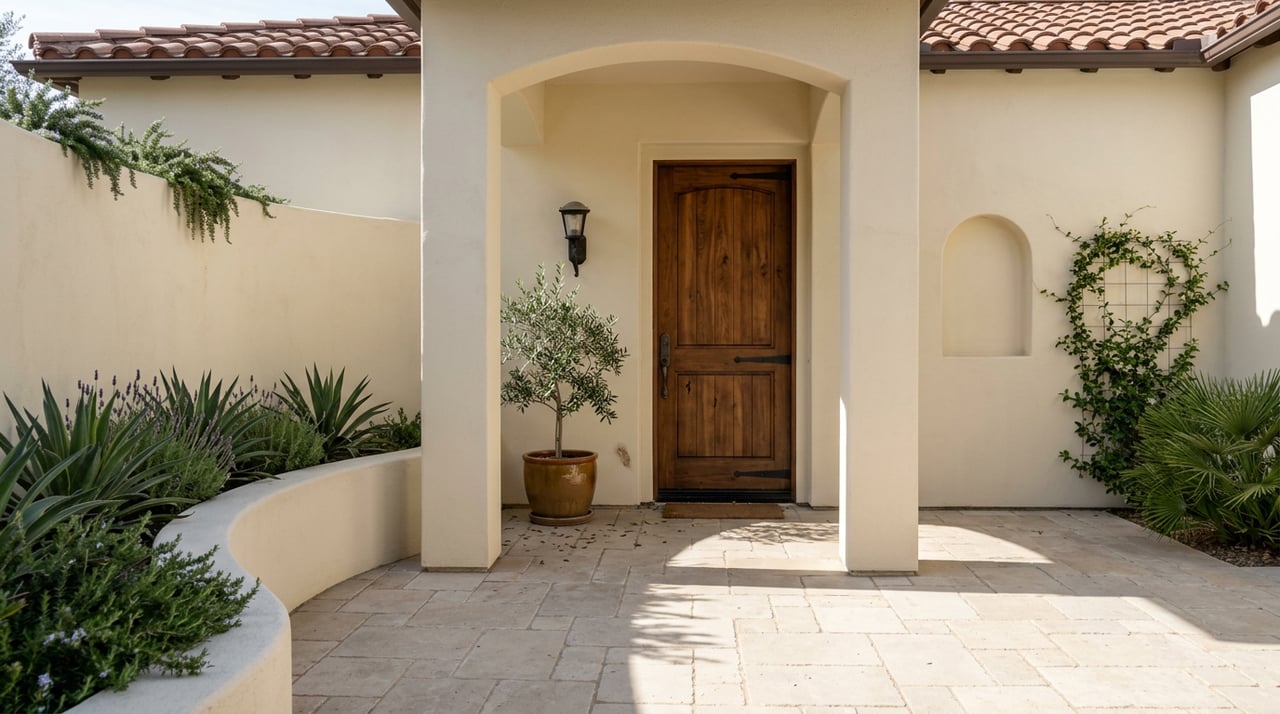
What to Know Before Selling or Buying in Rossmoor Walnut Creek
August 13, 2026
August 13, 2026
Say a buyer falls for a co-op in the low $200,000s inside Rossmoor, the gated 55+ community that takes up a good stretch of Tice Valley in Walnut Creek. The price looks like a steal next to anything else in the city. They call their regular bank for a preapproval letter and hear something they were not expecting: their lender cannot touch this deal, and it has nothing to do with their credit or their income.
That is an important detail for buyers to understand. Rossmoor is not just an age-restricted community with a golf course and a shuttle system. JVM Lending reports that since early 2024, the entire community has been ineligible for standard Fannie Mae and Freddie Mac financing because its master insurance coverage fell below the threshold those agencies require. That single fact changes the shape of almost every transaction that follows, whether the home in question is a co-op priced in the low $200,000s or a single-family house priced above $1 million.
Non-warrantable status usually attaches to one building or one small HOA with a specific problem, like too many rentals or a litigation history. Rossmoor is a different case entirely. It spans roughly 1,800 acres and houses nearly 10,000 residents across more than 6,700 units. The trigger was the same wildfire-driven insurance pressure that has been reshaping coverage availability across California, not anything specific to Rossmoor's maintenance or governance.
The practical effect: buyers end up looking at portfolio loans, non-QM products, co-op share loans, or cash, and the difference between a lender who has closed Rossmoor deals before and one who has not can be the difference between a 10-day close and a purchase that falls apart in week three.
Rossmoor is not one product. It is three, and the financing conversation looks different for each.
| Ownership type | Typical price range | What financing looks like |
|---|---|---|
| Co-op | Starts around the low $200,000s | Co-op share loan or cash |
| Condominium | Roughly $400,000 to over $1 million | Portfolio or non-QM loan in most cases |
| Single-family home | Typically above $1 million | Even higher-priced purchases usually route through portfolio lending or cash |
The co-op tier deserves its own warning: financing works closer to a business loan than a mortgage.
Monthly costs stack differently too. HOA dues across Rossmoor generally run from around $570 to $948 a month depending on unit type, on top of whatever the mortgage or share loan payment turns out to be once a buyer finds the right lender.
Rossmoor says every sale inside Rossmoor also carries a Membership Transfer Fee charged by the Golden Rain Foundation, the nonprofit trustee that holds the community's shared facilities and infrastructure in trust for its 23 Mutuals. As of April 1, 2026, that fee is $18,000.
This is not a made-up junk fee. California lawmakers took up the question directly in 2010, when SB 1128 confirmed the Foundation's right to keep charging transfer fees as a community service organization, precisely because Rossmoor uses the fee in place of raising monthly assessments to fund shared infrastructure.
There is one exemption worth flagging for anyone dealing with an estate. Under Rossmoor Policy 102.1.4, a person who inherits a Rossmoor property can request a refund of the fee if they can show they never occupied the home or used its amenities after taking title. For families managing a parent's estate, that is a detail worth confirming before the fee gets paid rather than after.
Selling a Rossmoor home also means dealing with an inspection and permitting process that sits entirely outside city hall. Rossmoor's own Alterations and Resales Department, based at 800 Rockview Drive, handles the resale inspection and any permit applications tied to the sale. It is a separate step from whatever inspection a buyer's agent orders.
The Rossmoor 2025 Fee Schedule says permits issued through this process are only valid for six months. Given how often escrow timelines run 30 to 45 days, this is a step worth starting the moment a listing goes active, not after an offer is accepted.
None of this cancels out what draws people to Rossmoor in the first place. Two golf courses, five clubhouses, more than 200 clubs, and a gated setting with its own transportation system are real advantages for the right buyer. The point is that the path to owning there runs through a financing and governance structure that looks nothing like a standard Walnut Creek resale, and treating it like a normal transaction is where deals stall.
This is the kind of transaction where an SRES designation earns its keep. Families sorting out a parent's estate, adult children acting as executors, and buyers who have never dealt with a co-op share loan all benefit from someone who has already mapped out where the friction sits before it shows up in escrow.
Is Rossmoor actually part of Walnut Creek? Yes. It sits within city limits, off Tice Valley Boulevard, though it carries its own ZIP code, 94595, and its own gated governance structure separate from the rest of the city.
Can a buyer get a loan at all right now? Yes. Portfolio loans, non-QM products, co-op share loans, and cash purchases are common paths buyers consider.
What happens to the transfer fee when a home passes through inheritance? The Foundation's inheritance refund process is described above.
Rossmoor rewards buyers and sellers who plan around its rules rather than around a typical Walnut Creek timeline. If you are weighing a purchase, a sale, or helping a family member sort through an estate that includes a Rossmoor property, Michael Forkas can walk through the financing path, the fee structure, and the resale process before you are locked into a contract that assumes a standard transaction. Let's Connect.
This article is general information, not legal, tax or financial advice. Consult a qualified professional about your situation.
Stay up to date on the latest real estate trends.
Partner with an experienced developer and advisor for your next real estate move.
MICHAEL FORKAS | CA DRE# 01730105
ADDRESS WALNUT CREEK CA 94595