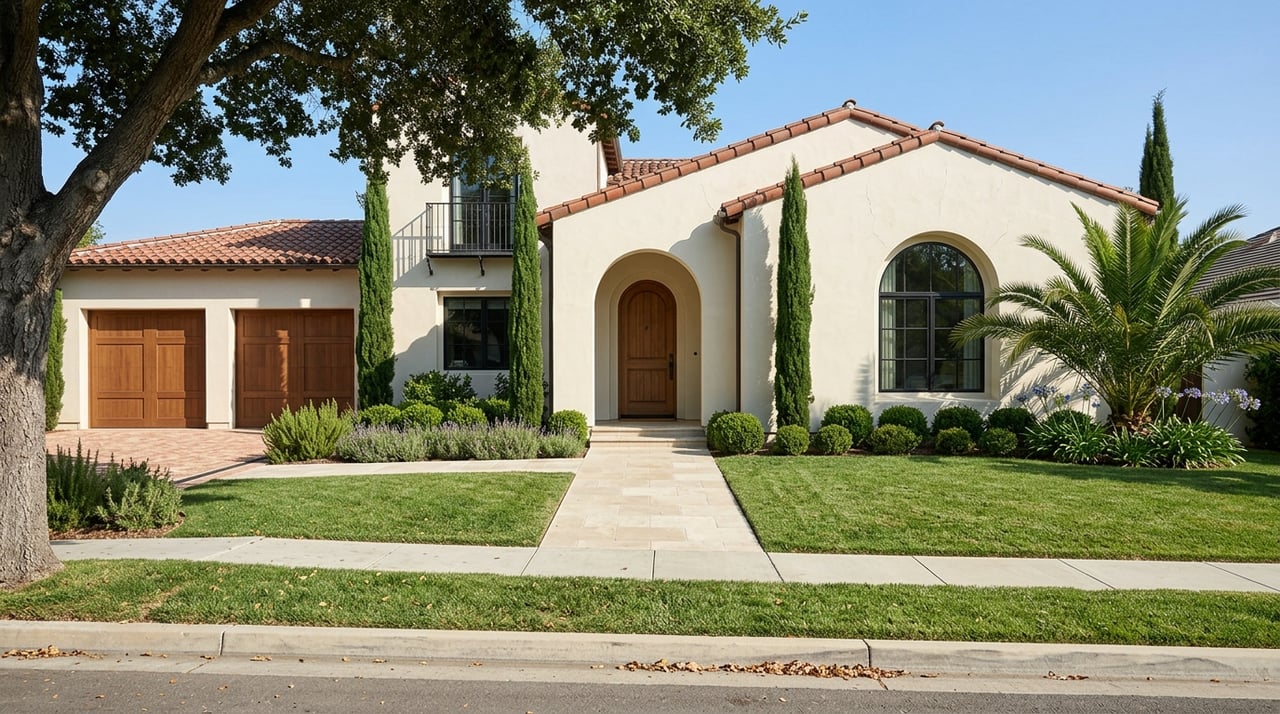
Why Lafayette’s Semi-Rural Lifestyle Appeals to Buyers
April 16, 2026
April 16, 2026
If you want more space, more scenery, and an easier connection to the rest of the Bay Area, Lafayette often comes up for good reason. It offers a quieter, lower-density setting than many nearby urban centers, yet it still gives you practical access to transit, downtown amenities, and outdoor recreation. If you are weighing lifestyle against commute reality, this guide will help you understand what makes Lafayette stand out and what to keep in mind before you make a move. Let’s dive in.
Lafayette has the profile of a small East Bay city with a more established suburban feel. According to the U.S. Census QuickFacts for Lafayette, the city had an estimated population of 25,371 in 2024 across 15.22 square miles, with a population density of 1,690 people per square mile.
Those numbers matter because they help explain the lifestyle on the ground. You get a community that feels less crowded, more residential, and more spread out than many Bay Area locations, while still staying connected to major job centers and everyday services.
BART also describes Lafayette as centrally located in the East Bay hills with a quiet rural atmosphere and a distinctive downtown on its Lafayette Station page. That combination of hillside setting and practical transit access is a big part of the city’s appeal.
A semi-rural lifestyle does not mean remote. In Lafayette, it means you can enjoy open space, trails, and a calmer pace of life without giving up access to shopping, dining, and regional transportation.
The city says it has seven city-managed trails plus a trail network in Community Park, totaling about 16 miles of trails. These routes help connect neighborhoods, public facilities, and the broader Lamorinda trail network, which supports the kind of daily walking and biking routines many buyers look for.
That trail access shapes everyday life in a practical way. Instead of driving everywhere, you may find that recreation, exercise, and even some local errands can fit into a more outdoors-oriented routine.
One of Lafayette’s signature outdoor destinations is the Lafayette Reservoir. EBMUD describes it as a year-round, day-use park off Highway 24 and about one mile from Lafayette BART, with hiking, jogging, fishing, boating, picnicking, a paved 2.7-mile Lakeside Nature Trail, and an unpaved 4.7-mile Rim Trail.
If you want even more open space, Briones Regional Park adds a much larger natural backdrop. The park spans 6,255 acres and offers hiking, running, biking, horseback riding, picnicking, and birdwatching, with Lafayette-access staging areas at Bear Creek Road and Reliez Valley Road.
For many buyers, this is where Lafayette becomes especially compelling. You are not just buying a home. You are buying easier access to outdoor routines that can become part of your week, not just an occasional weekend plan.
Lafayette also offers everyday recreation closer to home. The city’s Community Park includes 68 acres with sports fields, a reservable picnic area, a tot playground, a natural trail, and pétanque courts.
The Parks, Trails & Recreation Department says it manages six parks, seven neighborhood trails, a community center, and recreation programs for all ages. That gives Lafayette a well-rounded outdoor lifestyle that is not limited to major regional destinations.
Lafayette’s outdoor setting is a major draw, but the downtown area is what helps the city feel livable day to day. The city describes downtown as its commercial, civic, and cultural center, and says the Downtown Core is the city’s primary retail center and most pedestrian-friendly commercial district in its planning documents.
That is important if you want a town with character, not just a bedroom community. Downtown stretches along Mount Diablo Boulevard and is intended to support shopping, dining, cultural events, and a traditional small-town Main Street feel.
Recent city reporting suggests that downtown continues to evolve in that direction. In April 2026, the city reported that two downtown projects were completed, adding housing within walking distance of shops, restaurants, and the Lafayette BART station, with one project also adding ground-floor commercial space.
Downtown life is not only about restaurants and retail. Lafayette’s community programming also adds to the local rhythm of life.
The city highlights its Parks & Recreation offerings and Community Center, including classes, rentals, youth and older adult programming, a multi-sport rink, public art exhibitions, poetry programming, and the annual Art & Wine Festival. For many households, these kinds of civic amenities make a place feel active and connected without feeling hectic.
One of Lafayette’s strongest selling points is that it offers a quieter setting without feeling cut off. Still, it helps to go in with clear expectations. Lafayette is commute-friendly, but it is not commute-free.
The Lafayette BART Station sits on BART’s Antioch ⟷ SFIA/Millbrae line. The station page also lists parking, bike racks, 32 BikeLink lockers, and County Connection bus connections, making it possible to mix car, bike, bus, and rail depending on your schedule and destination.
That flexibility is a real advantage in the Bay Area. If your household has different work locations or hybrid schedules, Lafayette gives you more than one way to piece together a workable commute.
Lafayette is also investing in the connection between downtown and BART. The city says the BART Bike Station/Pathway Project is designed to improve safe pedestrian and bicycle access to the station, add an ADA-compliant shared-use path to downtown, and create a secure bike station for up to 82 bicycles.
That matters because convenience is not just about whether a station exists. It is also about how easy and comfortable it feels to reach it from daily destinations.
The broader transportation picture is still hybrid. The census reports a mean travel time to work of 29.3 minutes, which points to a manageable but very Bay Area-style commute reality.
Lafayette’s lifestyle advantages are real, but so are the costs of entry. Census data shows a median owner-occupied home value of $2,000,000+ and an owner-occupied housing rate of 77.1%, which supports the view that Lafayette is an established, high-cost market with many long-term homeowners.
That does not mean Lafayette is off the table. It means you should approach the market with a clear plan, realistic budget expectations, and a good understanding of how location, lot, condition, and improvement potential affect value here.
For some buyers, the right fit may be a move-in-ready home close to downtown or BART. For others, the opportunity may be in a property with renovation upside, where smart updates could better align the home with your lifestyle over time.
In a market like Lafayette, buying is not only about finding a house you like. It is also about understanding the tradeoffs between commute convenience, outdoor access, downtown proximity, and property condition.
That is where careful guidance matters. In higher-value East Bay markets, the details can have a major impact on long-term satisfaction, whether you are comparing lot orientation, access to trail systems, renovation needs, or how a home fits your day-to-day routine.
If you are considering Lafayette, it helps to work with an advisor who can look beyond surface-level listing details and help you evaluate both lifestyle fit and property potential. If you want a clear, practical plan for buying, selling, or assessing opportunities in Lafayette and the East Bay, Michael Forkas can help you move forward with confidence.
Stay up to date on the latest real estate trends.
Partner with an experienced developer and advisor for your next real estate move.
MICHAEL FORKAS | CA DRE# 01730105
ADDRESS WALNUT CREEK CA 94595